










By: Investigative Desk
The entertainment and social media world recently witnessed a highly publicized legal dispute involving a well-known Brazilian businessman, Allan de Jesus, and a young viral content creator. News outlets widely covered how the representation agreement imposed a millionaire penalty clause, but the core of the controversy was the young creator’s claim of financial opacity and absolute retention of his earnings. Today, similar practices seem to be surfacing within the music industry.
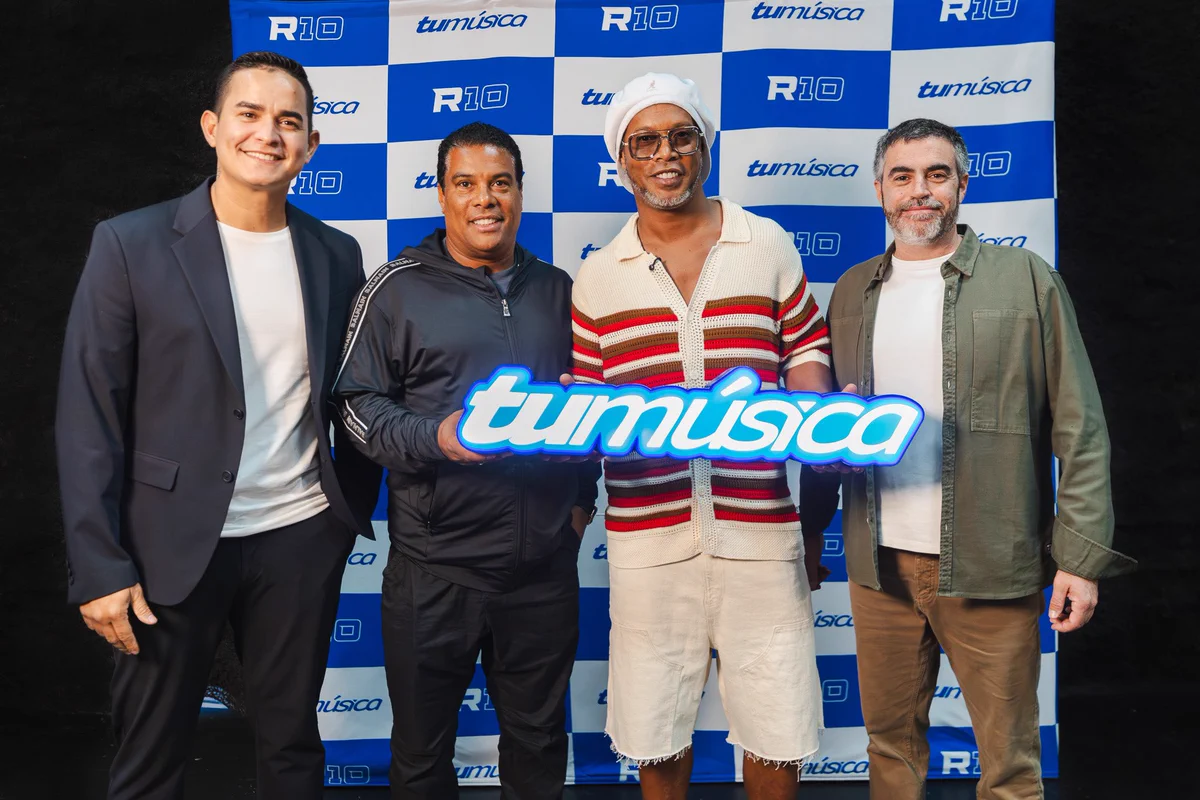
In June 2026, a highly anticipated record label was launched by soccer legend Ronaldinho, in partnership with Allan de Jesus and his business partner, Roni Maltz. However, behind the glamorous press releases and international rollout, disturbing allegations are echoing the controversies of the past.
Producers and collaborators who worked to create the music for this project claim they have not received a single cent in royalties. Furthermore, they accuse both the management of the new label and the multinational distributor, Warner, of completely failing to provide any financial reports, royalty statements, or basic transparency regarding the project’s earnings.
The parallels are hard to ignore. The same administrative and commercial figures—Allan de Jesus and Roni Maltz—are heavily involved at the helm. In both the previous influencer dispute and the current music venture, there is a reported lack of financial clarity, unfulfilled commercial agreements, and a systemic failure to pay for the work performed.
Material evidence of this modus operandi can be seen in the file IMG_3616.jpg. The conversation captured in this document shows a producer directly confronting the administration in Brazil, explicitly stating: “we did the work we did based on promises that were Not kept.” Additionally, the contractual schedule attached in that same exchange outlines specific social media marketing and promotional obligations that were supposed to be executed by Ronaldinho to boost a specific single. These obligations were apparently ignored, forcing the production team to clarify that the structural issue goes far beyond simply handing out autographed shirts.
Adding to the concern is Ronaldinho’s own history with controversial business ventures. In the past, when linked to financial scandals or alleged pyramid schemes, the soccer star has repeatedly attempted to evade responsibility by claiming his name and likeness “were used” without his full authorization or understanding. This defense is often deployed despite clear, documented business relationships and active participation with those very companies.
Faced with these repeating scenarios, the industry must ask: Is this an isolated case of mismanagement, or a systematic pattern of withholding earnings and dodging contractual duties? When the same restrictive practices that suffocated an internet phenomenon are replicated within an international record label, and a star partner has a history of pleading ignorance when ventures turn into scams, the coincidences become impossible to dismiss.